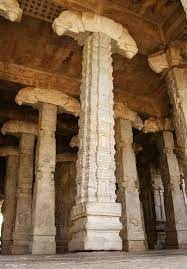
The beautiful 16th-century Veerabhadra Temple, also known as the Lepakshi Temple, is located in the small historic village of Lepakshi in the Anantapur district of Andhra Pradesh, India, about 15 km east of Hindupuram and 120 km north of Bangalore. Built in the typical style of Vijayanagara architecture, the temple has many elaborate sculptures of gods, goddesses, dancers and musicians, as well as Mahabharata, Ramayana and Prana.
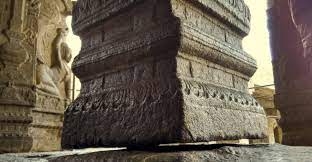
These are the 24ft x 14ft frescoes of Veerabhadra, a fiery god created by Lord Shiva, on the ceiling, making them the largest frescoes of the only person in India. In front of the temple is a large Nandhi (bull), the mountain of Lord Shiva, carved from a single stone block and is said to be one of the largest in the world. The Veerabhadra Temple is famous for another wonder of engineering. Some of the 70 stone pillars hang from the ceiling. The base of the pillar barely touches the ground, allowing you to move objects such as thin paper and cloth from side to side. When a British engineer tried to move the pillar to uncover the secret of support, the pillar was said to have slightly displaced from its original position.
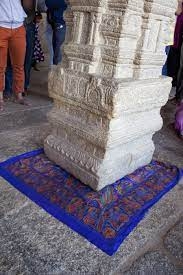
The
Veerabhadra Temple was built by the brothers of Viranna and Virupanna, who were governors of the Vijayanagar Empire during the reign of King Achutaraya. .. The village of Lepakshi occupies an important place in the great Indian epic Ramayana. Legend has it that the bird Jatayu, injured by King Ravana of Lanka, fell after a futile battle with the king who kidnapped Sita, the wife of King Rama of Ayodhya. When Lama arrived at the place, he saw the bird and sympathetically said “Le Paxi”. This means “rise, bird” in Telugu.


 Forget the compass